


Solana Average Transaction Fee: 2025 Data Explained


Table of contents

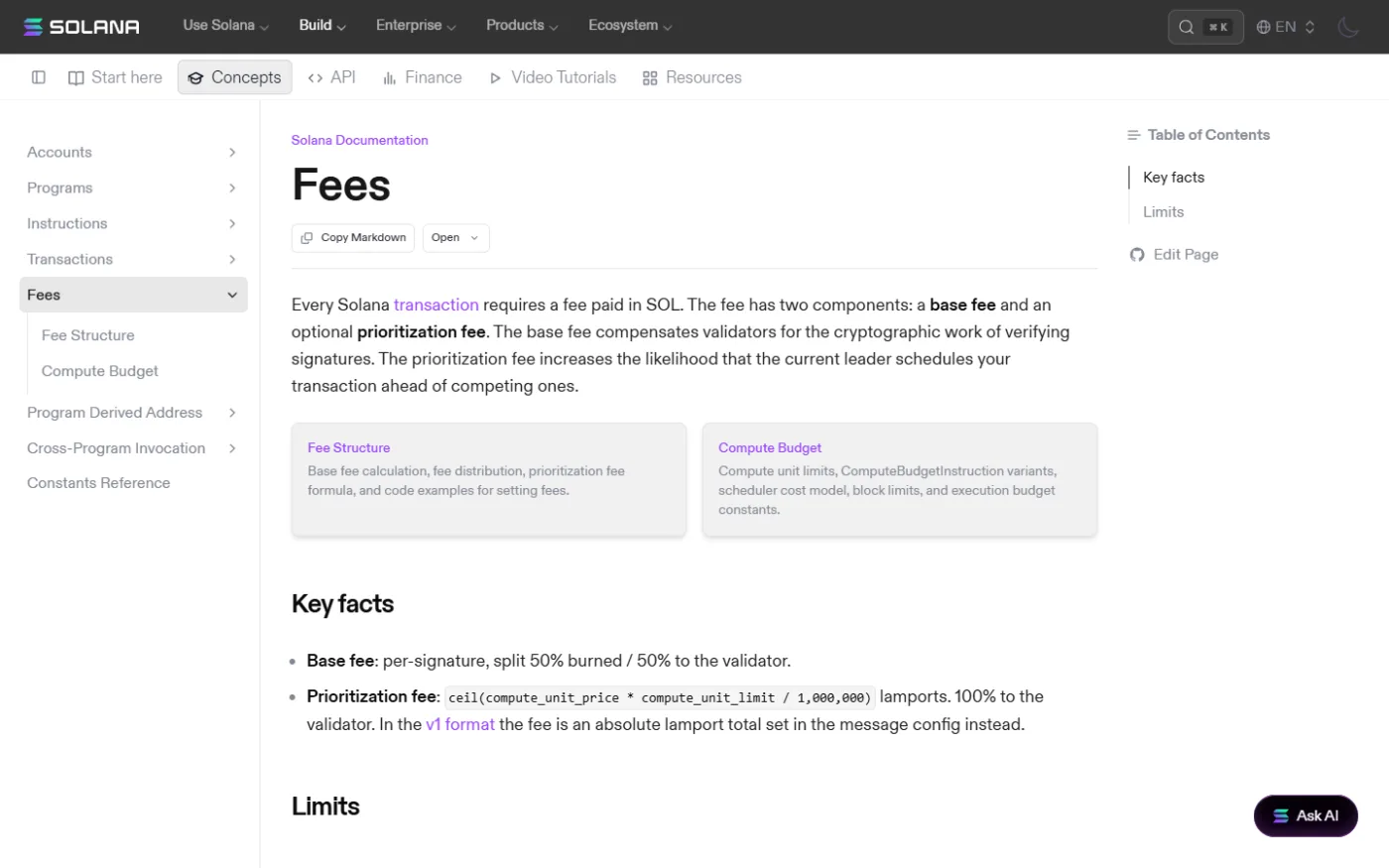
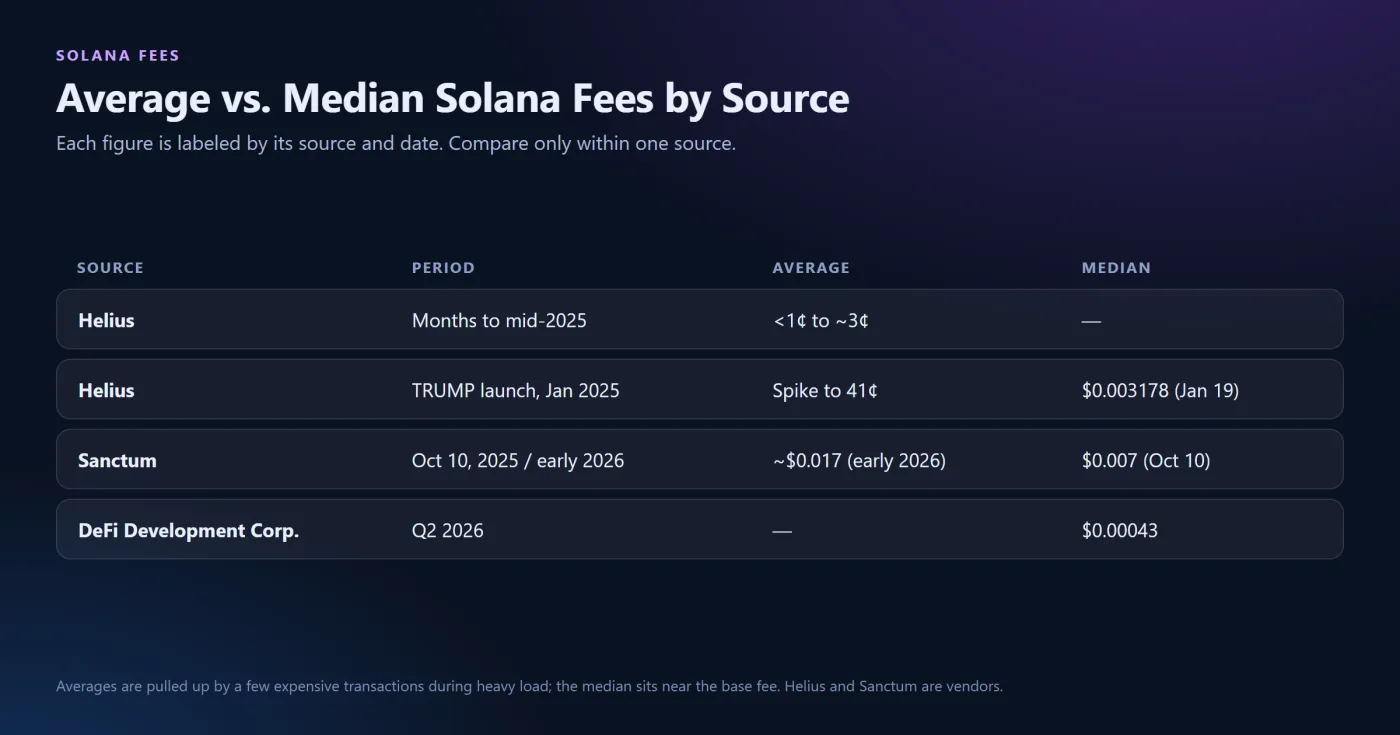
A Solana transaction costs a base fee of 5,000 lamports (0.000005 SOL) per signature and an optional priority fee. As a result, a typical Solana transaction costs a tiny fraction of a US cent at recent SOL prices. The average depends on the source, the period, and what is counted: Helius reported averages from under one cent to roughly three cents in the months before mid-2025, with a spike to 41 cents during the January 2025 TRUMP memecoin launch, while median fees were far lower. There is no single "official" average Solana transaction fee, and there is no reliable Q2 2025 average found, so the figures presented below are labeled by their source and date.
This article describes the Solana fee structure, explains why averages and medians differ so greatly, presents available 2025 and 2026 data, and describes how to check the current fee. It does not make any predictions about the future. SOL prices are volatile, and any USD figure mentioned here serves only as an illustration, not a quote. Keywords related to fees of a former EU official's speeches and a person's name are irrelevant to Solana network and are not considered in this article.
How a Solana Transaction Fee Works
The Base Fee
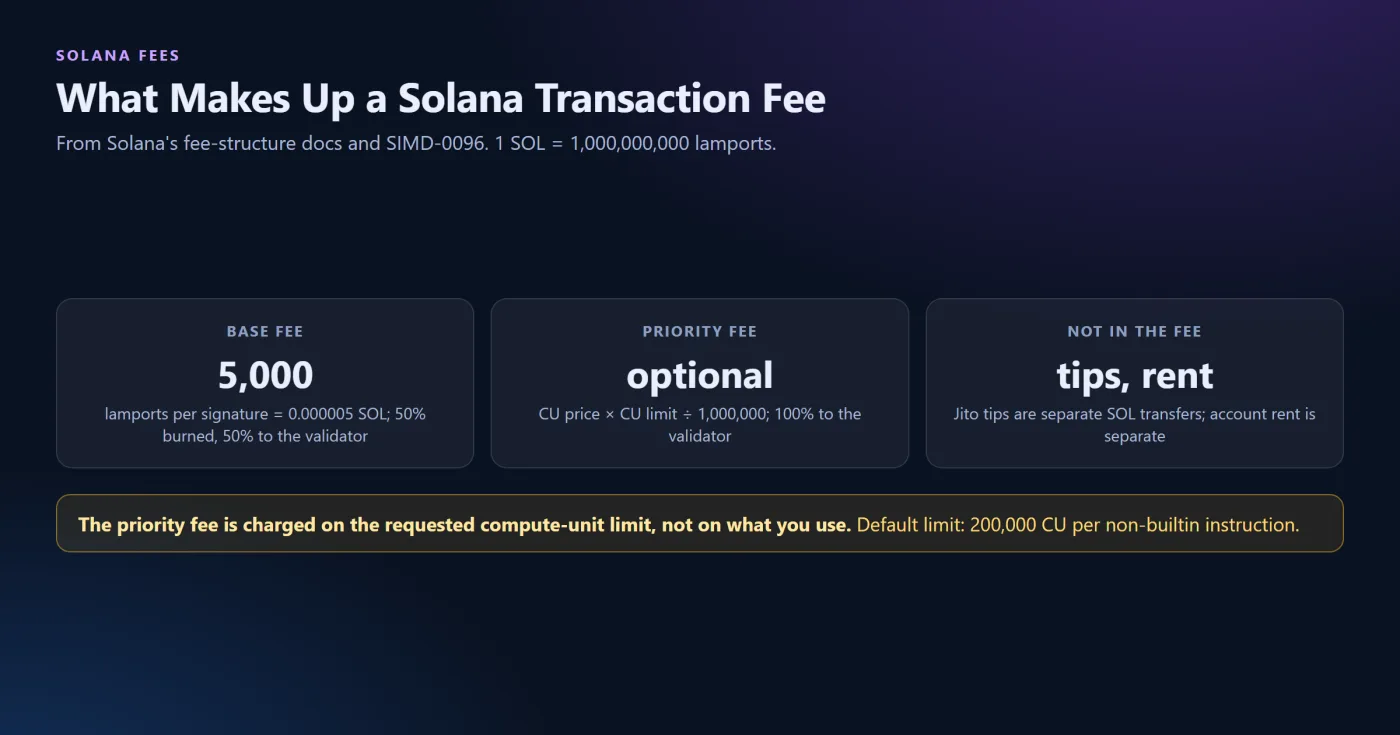
According to the official Solana fee-structure documentation, the base fee is charged for each transaction signature in 5,000 lamports, and one SOL equals one billion lamports. Thus, the base fee is 0.000005 SOL for most transactions that have one signature. The official documentation says that the signature count also includes some special precompile signatures. The base fee is split equally between burning (50%) and paying the validator that generated the corresponding block.
The Priority Fee
The priority fee is optional, and it is defined by the user. According to the documentation cited above, the priority fee equals the compute unit price multiplied by the compute unit limit, divided by 1,000,000 and rounded up, with the price denominated in micro-lamports. The compute unit price is 0 by default, so the default priority fee is also 0. The document notes that the priority fee is calculated based on the compute unit limit and not on the compute unit usage, and that the default compute unit limit is 200,000 units per non-builtin instruction. According to SIMD-0096, 100% of the priority fee is received by the validator, and no part of it is burned.
Tips and Rent Are Separate
Jito tips are regular SOL transfers used to buy an inclusion in a separate bundle auction, so they are not included into the fee field according to the Bitquery documentation and the RPC Fast article. Account creation rent is also not included in the transaction fee field, and the official Solana fees page considered for this article does not mention it either.
What the Data Shows for 2024 to 2026
2025: Averages and Medians
According to the H1 2025 ecosystem report from Helius (an infrastructure vendor) that was published July 1, 2025, the Solana fee average in the preceding few months was in the range from less than one cent to about three cents in periods of high load and reached 0.001531 SOL (or 41 cents) during the TRUMP launch in January 2025. However, the numbers in the report itself do not add up: at the $155 SOL price cited in the report elsewhere, 0.001531 SOL is about 24 cents. The report also provides a median fee of $0.003178 on January 19, 2025, and refers to third-party dashboards that it cannot verify independently.
In a post from Solana Data Insights dated March 14, 2025, the average priority fee is reported to be 0.000058 SOL and the median one is 0.000001 SOL, with the peak average being 0.0015 SOL on January 19. The cited figures do not specify whether they refer to the fee per transaction or per compute unit, so they are difficult to convert into USD fee. It is also stated that priority fees are more than 97.5% of the total transaction cost, while the share of the base fee is growing from 0.4% to 8.5%. These two statements are not reconciled.
2025 and 2026: Later Snapshots
In a blog post from February 14, 2026, Sanctum (a company selling Solana products) claims that the Solana median fee rose to $0.007 on October 10, 2025, and mentions an average fee of about $0.017 per transaction in early 2026. However, the post also provides a typical fee of $0.00025 that contradicts its base-fee figures at the SOL prices cited in the post, so Sanctum's numbers should be treated with caution.
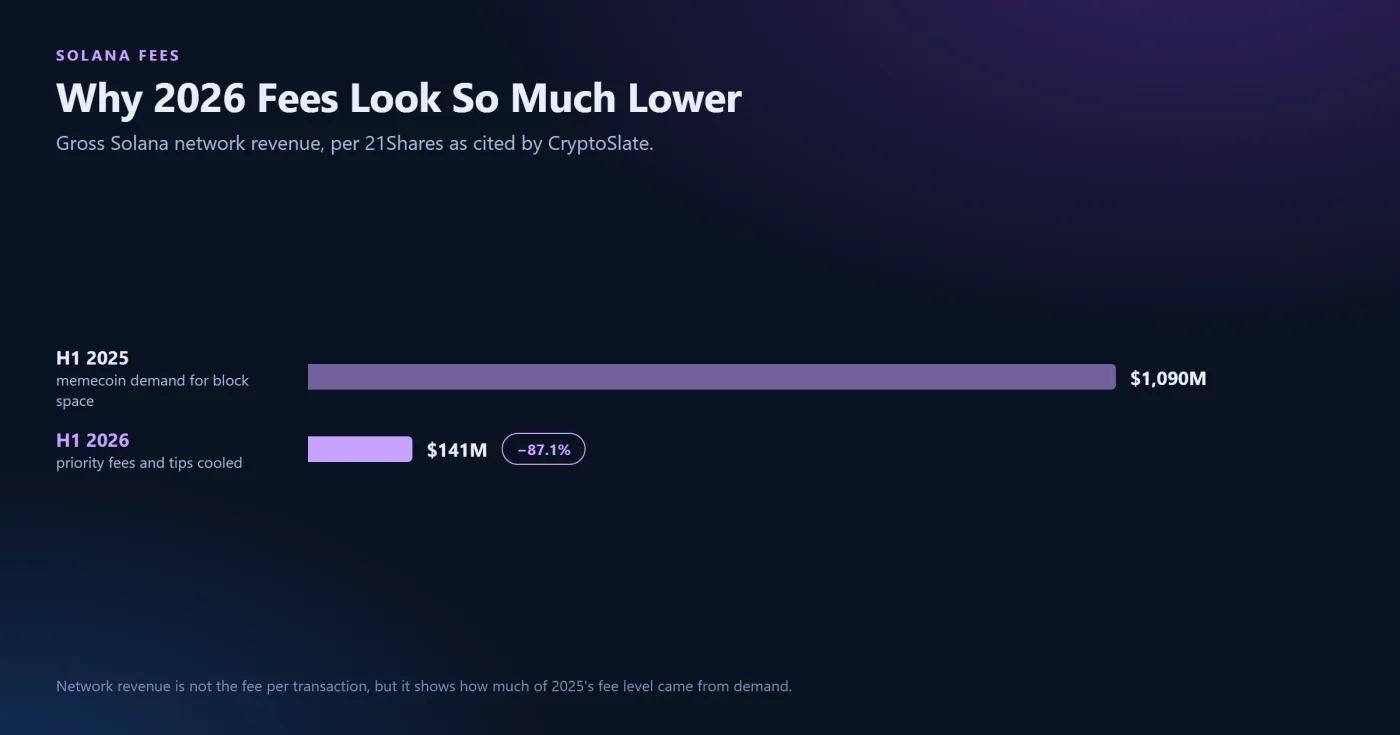
CryptoSlate, on September 2, 2026, cited a DeFi Development Corp. shareholder letter filed with the SEC for a median fee of $0.00043 in Q2 2026. The article reported no average fee. It also cited 21Shares for gross network revenue of $141 million in H1 2026 against $1.09 billion in H1 2025, a fall of 87.1%, which 21Shares attributes mainly to priority fees and Jito tips from memecoin trading that cooled. Network revenue is not the same as the fee paid per transaction, but the difference shows how much of 2025's fee level came from demand for block space.
Why Averages and Medians Differ
Median represents the middle transaction, and the Bitquery sample puts it at the base fee, with fees tending to cluster around 5,000 and 10,000 lamports. The average is dragged upwards by a few very expensive transactions in periods of heavy load, so it tends to be much higher than the median. Blockworks defines its average as the daily average of base plus priority fee in SOL and does not say anything about tips and vote transactions, so two sources providing an "average" fee may be measuring different things.
Worked Examples
A Hypothetical USD Conversion
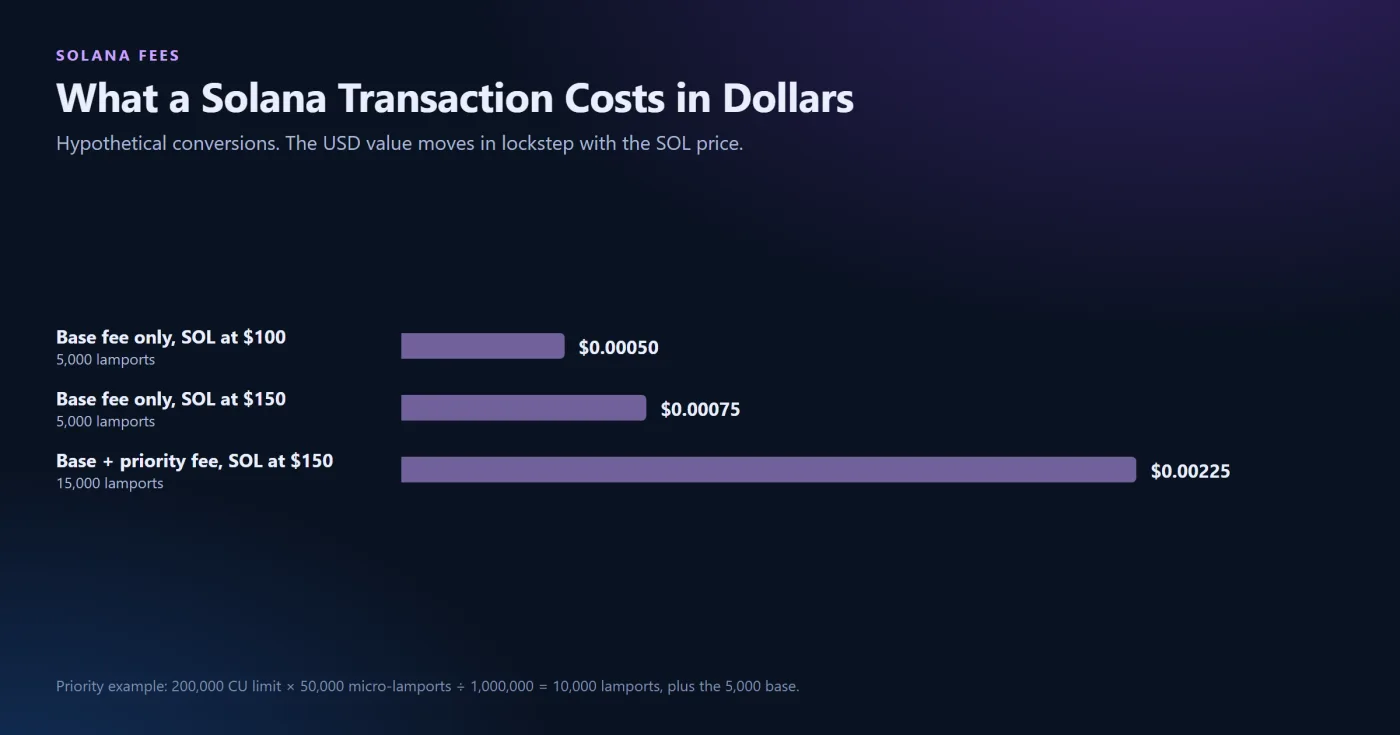
This is just an illustration, not a quote. The single-signature transaction without priority fee costs 5,000 lamports, or 0.000005 SOL. At $150 per SOL, that is $0.00075. At $100 per SOL, it is $0.0005. These are the same SOL amounts that Sanctum uses, and the USD values are changing in lockstep with the SOL price.
A Hypothetical Priority Fee
This example is based on the documented formula and assumed inputs. The compute unit limit of 200,000 and the compute unit price of 50,000 micro-lamports give 200,000 × 50,000 ÷ 1,000,000 = 10,000 lamports. With 5,000-lamport base fee, it makes 15,000 lamports or 0.000015 SOL that is about $0.00225 at $150 per SOL. Setting a limit far above the real need would raise the fee, since it is charged on the requested limit.
Why Fees Spike
According to the RPC Fast article, Solana fees are local to busy accounts citing research that fee percentiles for a simple USDC transfer can differ by two orders of magnitude. There is also a limit of 12 million compute units per account, so an overload caused by one popular memecoin launch can increase fees, while other transactions can stay cheap. The failed transactions are also charged, and the Bitquery sample shows them with higher average fee than successful transactions.
How to Check the Current Solana Fee
-
Check the fee in the wallet interface before confirmation. That fee reflects the actual cost of the transaction.
-
Check a block explorer for recently made transactions of the same type, to determine the base and priority fees portion.
-
Use the priority fee estimate from Solana RPC provider when building transactions and check whether the estimate is for the requested compute unit limit.
-
Convert the SOL fee to USD using the current SOL price, since any USD figure depends on it.
-
Keep a small SOL balance, because the base fee must be paid in SOL.
Risks and Limits
-
The priority fee can spike during memecoin launches, liquidations, and other stressful moments, like it happened in January 2025 and October 2025.
-
A priority fee set too low can cause the transaction to be delayed or rejected.
-
Third-party dashboards may count fees differently, so comparisons should be made only within the same source.
This article is educational and is not investment advice. Wallet and block explorer interfaces have not been tested in this article.
Related guides


 Scroll to top