


Dogecoin Mining: Hardware, Pools, and Real Costs


Table of contents
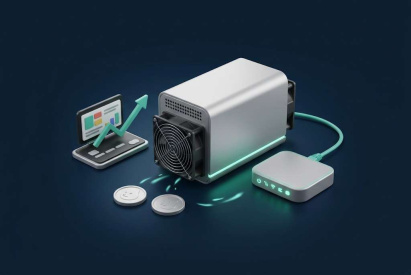
Dogecoin can be mined, but profitable mining today means a Scrypt ASIC machine, cheap electricity, and a pool, usually through merged mining with Litecoin. The Dogepedia guide to Dogecoin mining states that in the old days it was enough to have just a computer and a gaming GPU, but as hashrate grew, solo mining became very unlikely to find a block, and GPU mining results in close to zero profit and high energy bills. A regular PC or a smartphone is not a viable Dogecoin miner.
This guide will describe the principle of Dogecoin mining, hardware and mining pools involved, how to interpret a mining calculator output, and why cloud mining and mining apps require caution. It does not rank miners or pools. Prices, hashrate, and difficulty change daily, so live data should be checked.
How Dogecoin Mining Works
Dogecoin uses proof of work with the Scrypt algorithm. A MiningBoard page cites a block reward of 10,000 DOGE and block time of 60 seconds. The same page stated network hashrate of 2.69 PH/s, with no snapshot date provided, so this is illustrative data only.
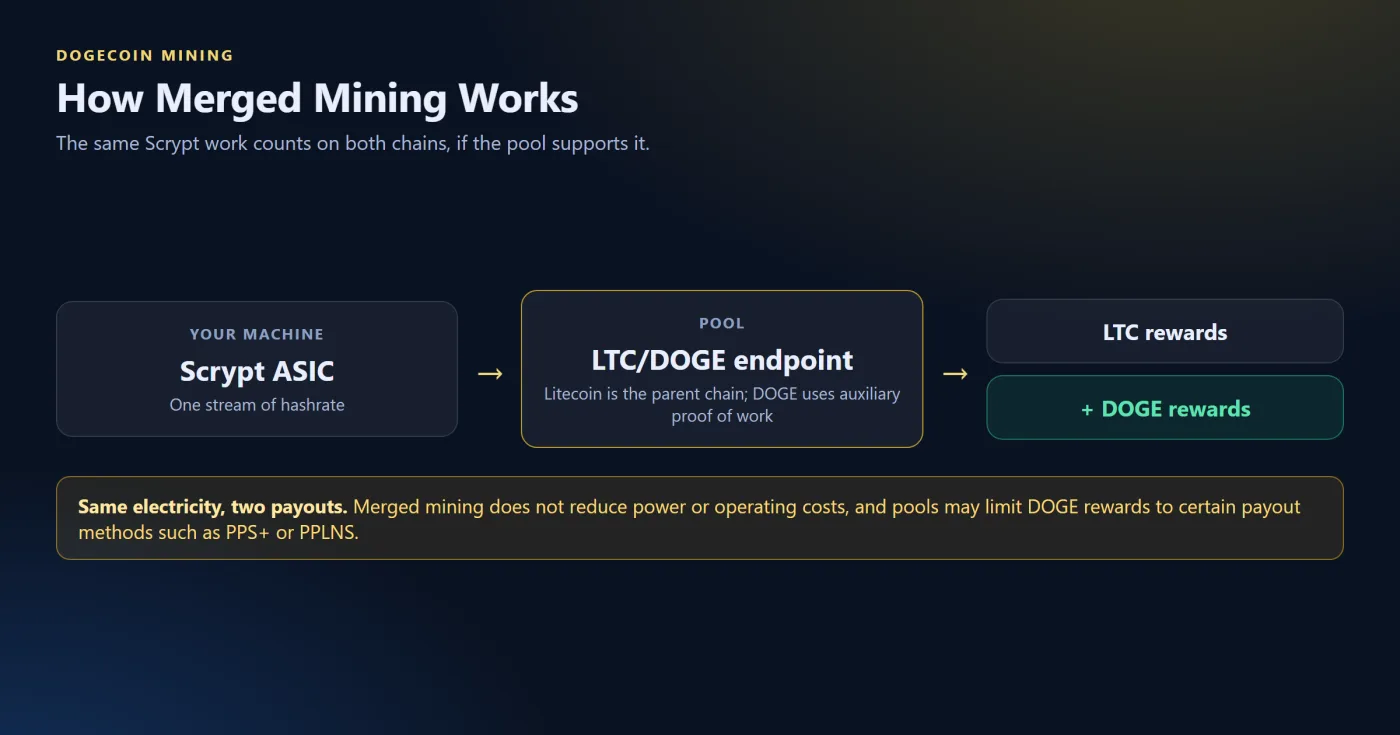
From 2014 onward, according to Dogepedia, Dogecoin could be merged-mined with other Scrypt coins, and Litecoin was the most common partner. ViaBTC's guide says that the auxiliary proof-of-work design of Dogecoin made it possible: Litecoin is the parent chain and the same Scrypt work done in a pool can be counted towards both chains if it is supported by the pool. Merged mining does not reduce electricity or operating costs.
Hardware: ASIC, GPU, or CPU
-
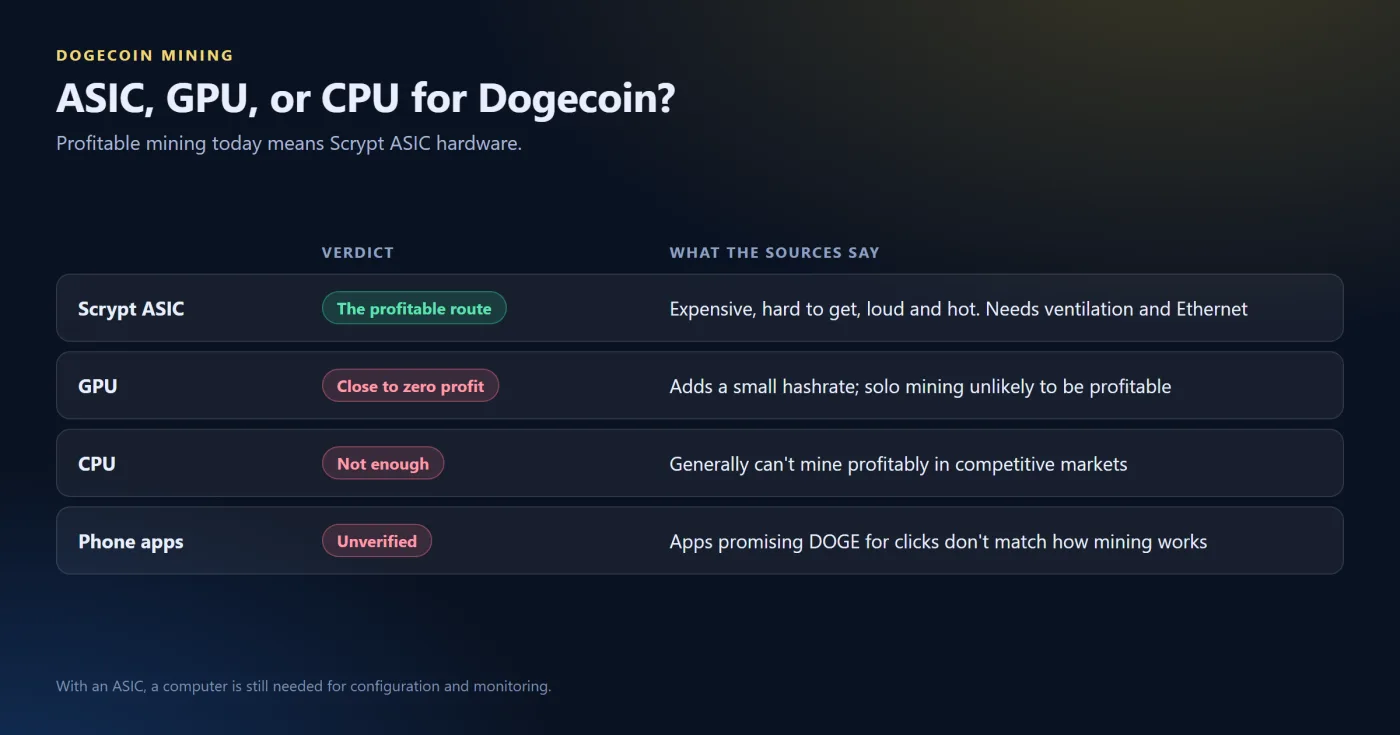
ASIC. According to Dogepedia, profitable mining nowadays involves Scrypt ASIC hardware, which is expensive, hard to acquire, louder, and hotter than GPUs, requiring a well-ventilated area and an Ethernet cable. Old models are less profitable than new models.
-
GPU. Possible, but Dogepedia claims that it is possible only to add a small amount of hashrate and earn close to nothing. Koinly's 2026 guide says that GPUs are still not likely to be profitable in solo mode.
-
CPU. Koinly says a CPU is generally not enough to mine profitably in competitive markets.
According to Dogepedia, in an ASIC mining setup, a computer is needed for configuration and monitoring purposes.
Pools and Payouts
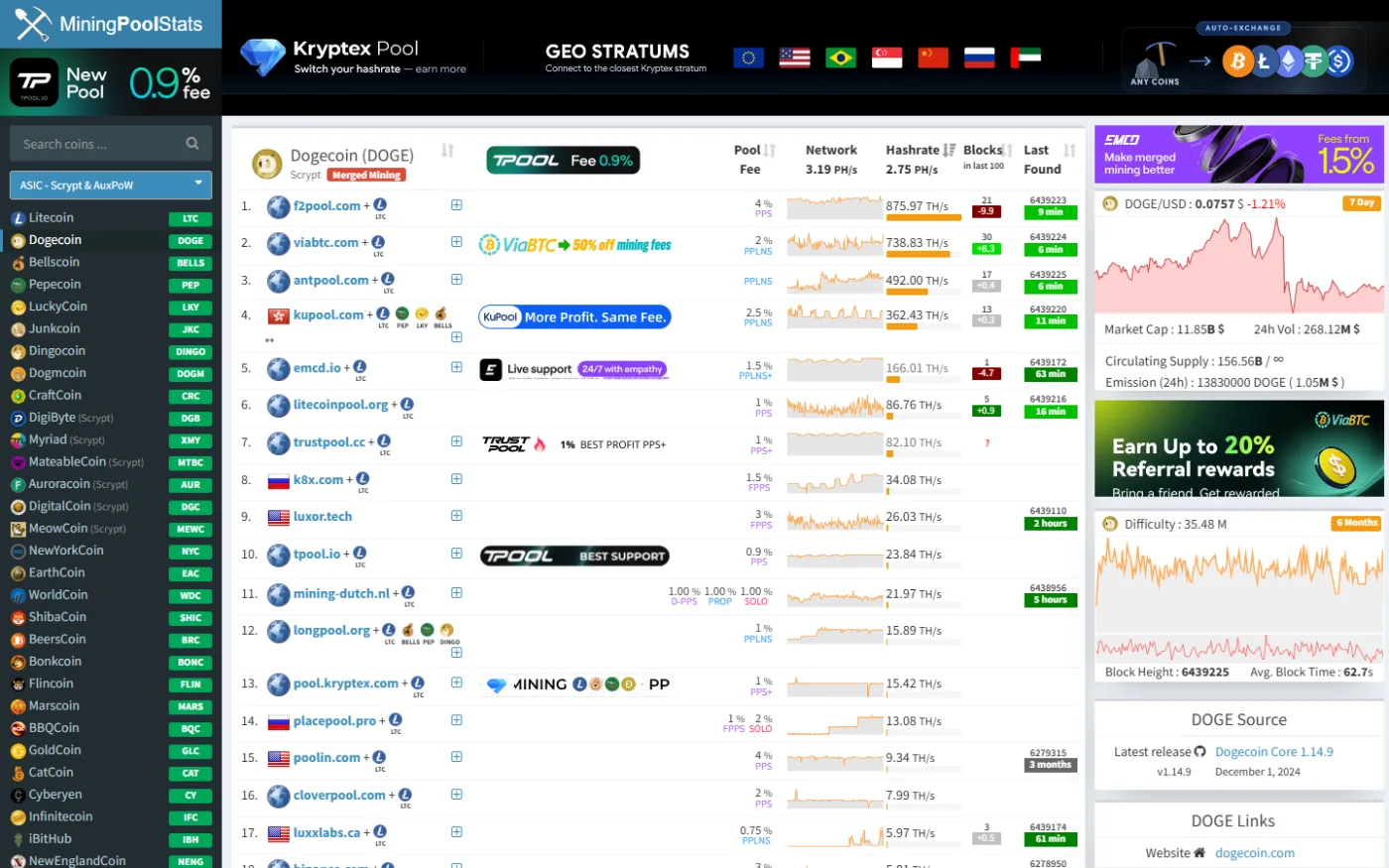
A mining pool combines hashing power and distributes rewards according to its rules. Dogepedia says that most pools charge a fee of around 1%. ViaBTC's guide suggests pointing a Scrypt ASIC at a Litecoin pool endpoint that supports LTC/DOGE merged mining, with no separate Dogecoin process. One must create a worker, specify a payout address with care because transactions are generally irrevocable, and check the payment method, minimum payout, and fees. According to ViaBTC's documentation, the users of PPS+ or PPLNS can receive DOGE merged-mining rewards under its current rules, but other payout methods may not be eligible. As this is a pool operator's page, it should be confirmed on the actual pool website.
F2Pool is listed as the largest pool with 31.3% of network hashrate and EMCD as the pool with lowest fee (1.5%) among pools with at least 1% hashrate according to MiningBoard, but there is no snapshot date. According to Koinly, the factors for comparison are pool size, fee, payout method, and reputation.
Reading a Mining Calculator
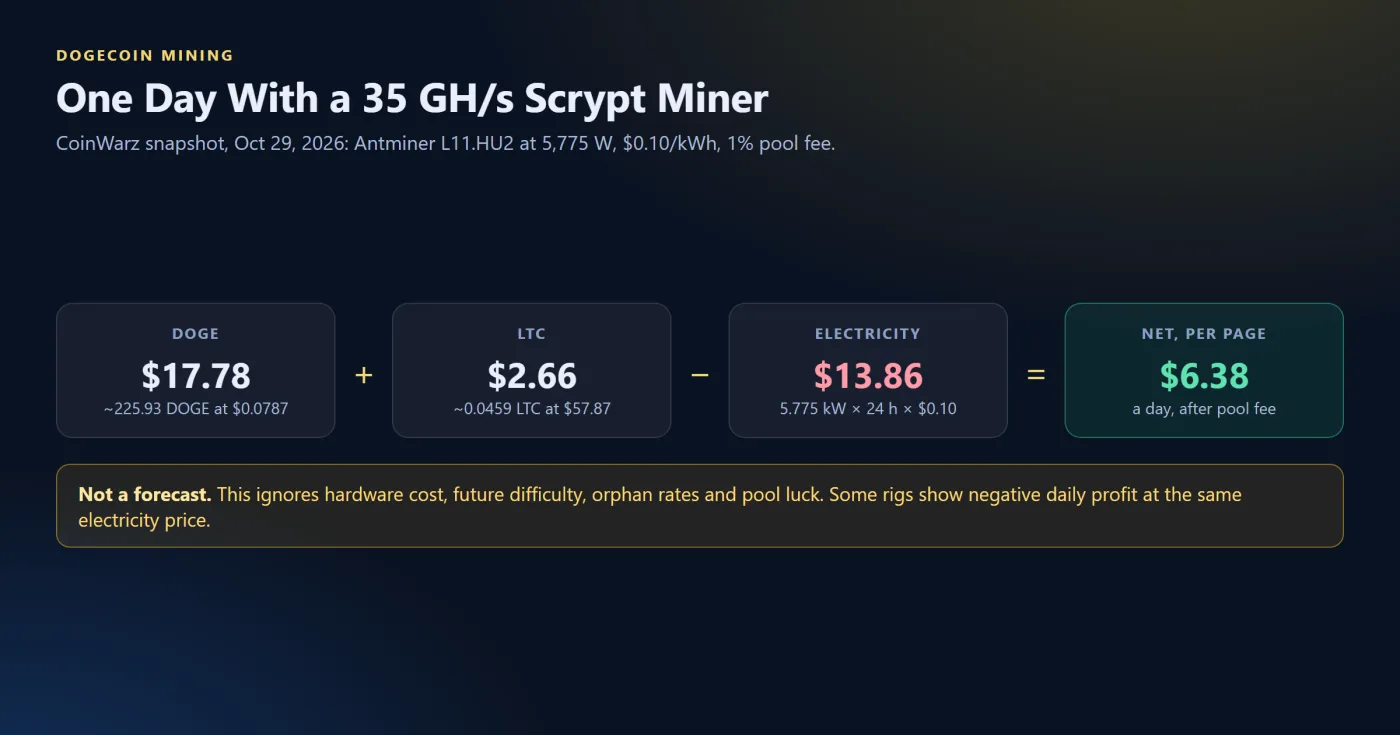
A calculator multiplies hashrate by the share of network hashrate, converts it into coins per day and subtracts electricity costs. According to CoinWarz's page, a snapshot was made on October 29, 2026 (05:53 UTC), and Antminer L11.HU2 35 GH/s unit consumes 5,775 W, electricity costs $0.10 per kWh and 1% of pool fee is implied.
A Worked Example From That Snapshot
It is an illustration based on the page's default settings, not a prediction. Electricity cost: 5.775 kW * 24 hours * $0.10 = $13.86 per day. The page claims about 225.93 DOGE and 0.0459 LTC per day. At DOGE $0.0787 and LTC $57.87, that is about $17.78 plus $2.66, or about $20.44 before pool fees, close to the page's $20.45. The page gives $6.38 net profit per day. This calculation ignores hardware cost, and 1,567-day break-even point claimed by the page has unknown basis. It also ignores future difficulty changes, orphan rates, and pool luck, which the page itself says are not included.
Note that DOGE alone would give you $17.78 and Litecoin gives a meaningful addition, which is why merged mining matters. According to MiningBoard's page, there are several rigs with negative daily profit at the same $0.10 per kWh assumption, so the profitability of the rig depends greatly on the machine and electricity price.
Cloud Mining and Apps
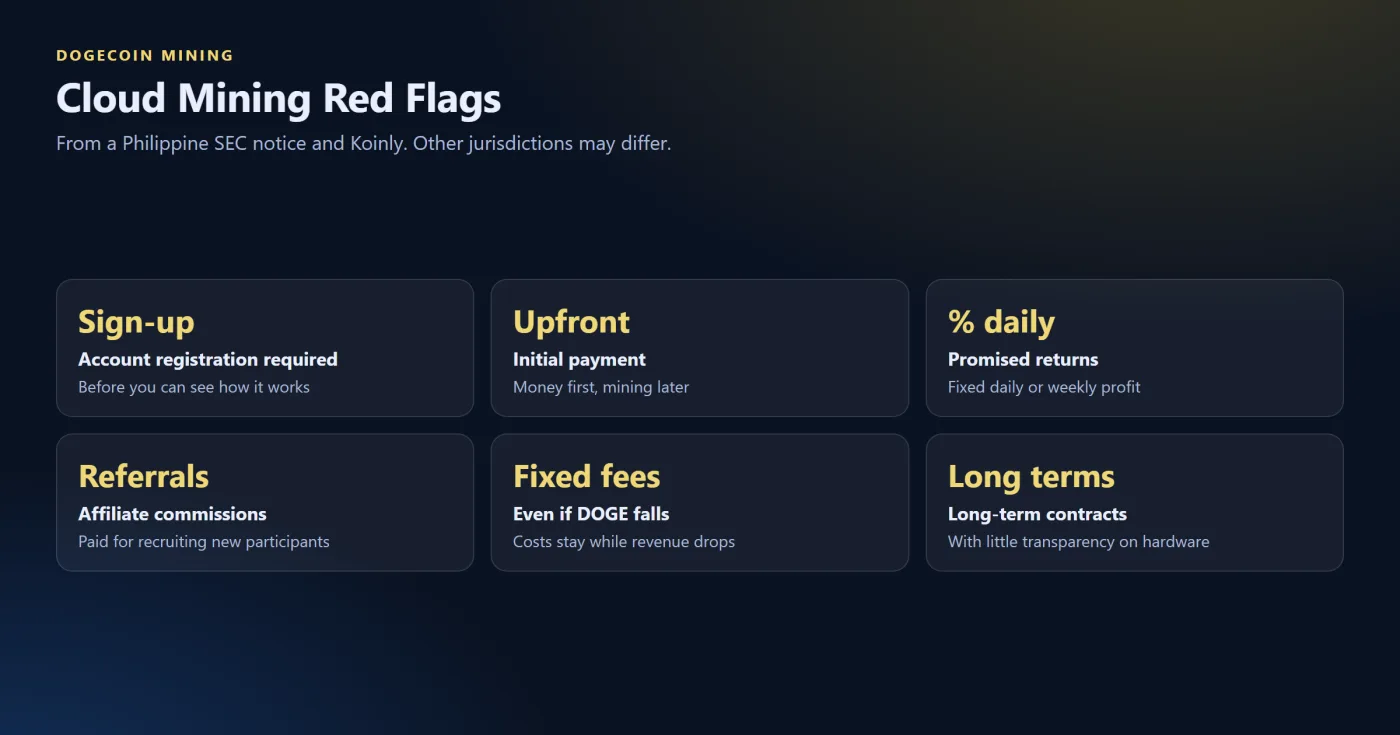
Koinly advises that cloud mining providers may have insufficient transparency, fixed fees regardless of DOGE price drops, and long-term commitments in contracts. According to the Philippine SEC, the red flags of cloud mining scams are required registration of accounts, initial payment, promised daily or weekly percentage profit on the investment, and affiliate commissions for recruiting new participants. It also said such contracts can function as investment contracts and be classified as securities. It is a notice by Philippine regulator without any date mentioned, so regulations of other jurisdictions may differ.
Dogecoin miner games and mobile apps were not reviewed for this article. Any app promising DOGE for clicks or background process is unverified, as the sources read suggest that profitable mining requires special hardware.
Taxes and Records
Koinly states that mining rewards are generally taxable as income at the time of receipt. The rules vary between jurisdictions, so it is advised to check the local tax requirements and keep the records of dates, amounts, and prices.
Risks
-
Price risks. The payments are made in DOGE or LTC and prices can fall.
-
Operating costs can be higher than the revenue.
-
Difficulty and hashrate can rise and diminish earnings per machine.
-
Pool terms, fees, and eligibility for merged rewards can change.
-
Scams. Fake pools, cloud mining services and wallet drainers exist. A legitimate pool will never ask for recovery phrase.
What to Check Live Before Mining
-
DOGE and LTC prices, network hashrate and difficulty.
-
Hashrate, power consumption and your electricity price of your machine.
-
Pool fee, payout method, minimum payout and merged mining capability.
-
Your payout address, verified twice, and a network that it belongs to.
-
Seller's reputation and warranty for your ASIC.
This article is educational in nature, and it is not investment advice. Mining is associated with risk of loss, and each individual must verify live data.
Related guides


 Scroll to top