


How to Find Your Crypto Wallet Address


Table of contents
- How to Find Your Wallet Address in Popular Wallets
- What Is a Crypto Wallet Address?
- What Is a Crypto Wallet?
- How Wallet Addresses Are Generated
- Why Address Formats Differ Between Blockchains
- One Wallet, Many Addresses
- Custodial Versus Non-Custodial Wallets
- Wallet Address Versus Private Key: A Critical Difference
- How to Verify You Have the Correct Address
- Safely Sharing Your Wallet Address
- Common Mistakes When Using a Wallet Address
- Related guides
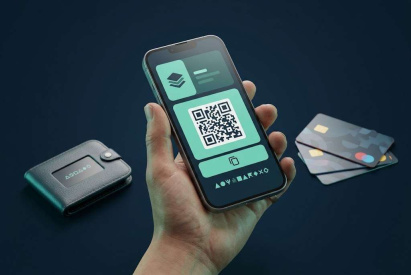
Your crypto wallet address can usually be accessed in just one tap from the main screen of your wallet. The exact way differs depending on whether you are dealing with a software or mobile wallet, an exchange account, or a hardware wallet – in software and mobile wallets, it is accessible through the "Receive" button, in exchange accounts – through "Deposit", and in the case of a hardware wallet, the address is displayed on the screen of the connected app after choosing the necessary account and coin.
Since the exact procedure varies depending on the type of wallet, it is better to take a closer look at each example separately before explaining what a wallet address really is.
How to Find Your Wallet Address in Popular Wallets
Software Wallets
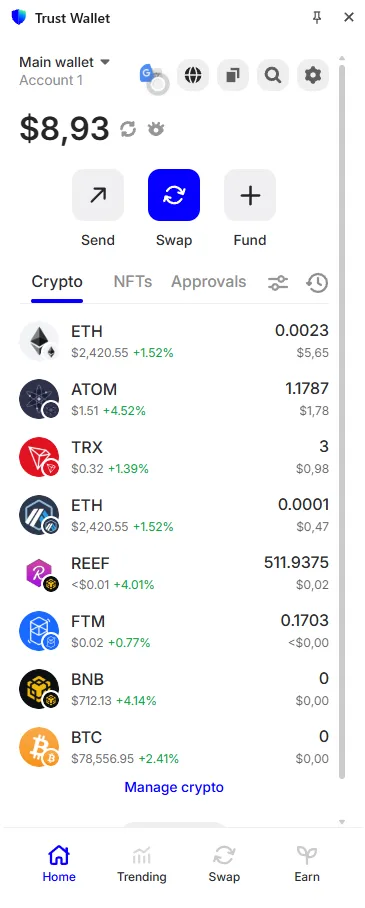
In browser extension and mobile wallets such as MetaMask or Trust Wallet, the address sits at the top of the main screen, often shown in a shortened form with the middle characters replaced by dots or dashes. By tapping on it or pressing the "Receive" button (if it exists), copies the full address to the clipboard or displays it alongside a QR code.
If your wallet supports several blockchains (like Ethereum, Polygon, and BNB Smart Chain), the network selector is located at the top of the screen. While the address itself may remain the same among several EVM-compatible blockchains, the more important thing is to check if you selected the right network before giving out the address.
Exchange Wallets
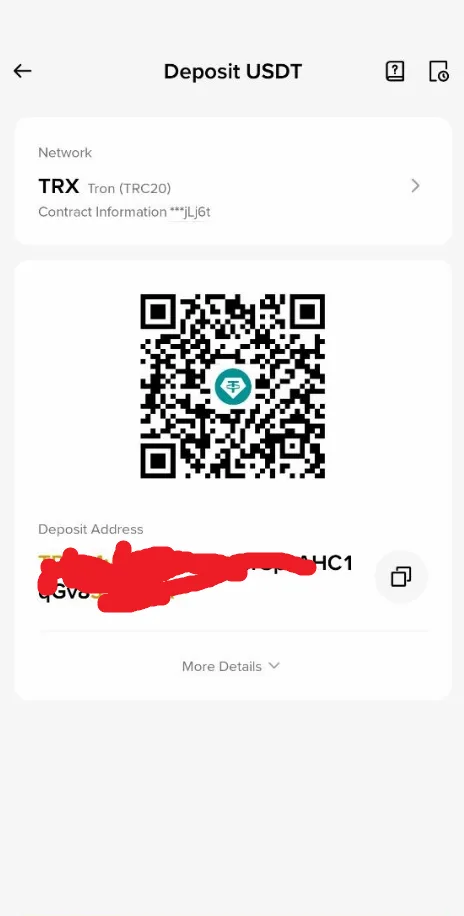
On a centralized exchange such as Coinbase or Binance, the wallet address is generated through a "Deposit" or "Receive" flow rather than being visible on a persistent home screen. After selecting the specific cryptocurrency to receive, the exchange displays a deposit address along with the specific network that address is built for. While the same cryptocurrency may have several different networks on one exchange, since exchanges commonly support several different networks for the same asset.
It is worth double-checking that the network shown on the deposit screen matches the network the sender intends to use. Selecting the wrong network on this screen is one of the more common mistakes people make when depositing to an exchange for the first time.
Hardware Wallets
While your hardware wallet (like Ledger and Trezor) stores your private keys offline, the address itself has to be checked through the connected companion software (Ledger Live or Trezor Suite app). After selecting the right account and cryptocurrency, the address will be displayed on the screen of the companion app, and reputable hardware wallets also display the same address directly on the device's own screen for verification.
Comparing the address displayed in the software with the one displayed on your hardware wallet device itself is an important security measure, since it confirms the connected computer has not been compromised to display a different address than the one the hardware wallet is actually generating.
What Is a Crypto Wallet Address?
A wallet address is a string of letters and numbers that functions similarly to an account number, identifying a specific destination on a blockchain where cryptocurrency can be sent. Anyone who knows an address can send funds to it, but sending funds does not require or reveal any other information about who controls that address.
Addresses are derived from cryptographic keys rather than being assigned by any central authority, which is why a wallet can generate a valid address instantly, without needing to register it with anyone or wait for approval before it becomes usable.
What Is a Crypto Wallet?
A crypto wallet is software, or in some cases dedicated hardware, that manages the cryptographic keys controlling access to funds recorded on a blockchain. While your wallet is the mechanism for managing the funds and not the storage place itself, the cryptocurrency does not actually exist in the wallet, but rather on the blockchain.
This explains why losing the private key or recovery phrase of the wallet (without having a backup) means losing access to the funds permanently, even though the funds technically still exist on the blockchain.
How Wallet Addresses Are Generated
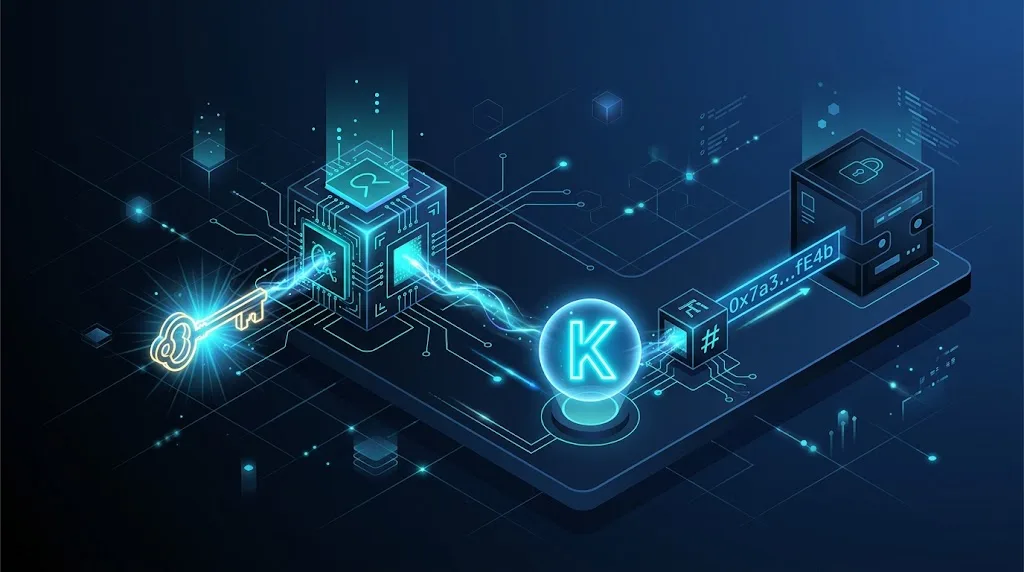
Every wallet address traces back to a private key, a large random number that only the wallet's owner should ever know. Through a series of cryptographic operations, the private key produces a corresponding public key, and the public key is then processed further, typically through a hashing function, to produce the shorter, more usable address that gets shared with others.
This one-directional connection is the basis of wallet security – it is computationally infeasible to work backward from a public address to discover the private key that generated it, which is what allows an address to be shared openly while the private key remains protected. That is why it is safe to use a public address and keep the private key secret.
Why Address Formats Differ Between Blockchains
Different blockchains use different cryptographic standards and encoding methods, which is why a Bitcoin address, an Ethereum address, and a Solana address all look distinctly different from one another. A typical Bitcoin address starts with 1, 3, or bc1 depending on the specific address type in use, while Ethereum and other EVM-compatible chains use a 42-character address starting with 0x, and Solana addresses appear as a base58-encoded string with neither of those prefixes.
Ethereum's address format is shared across every EVM-compatible network, including Polygon, BNB Smart Chain, Arbitrum, and many others, since they all derive addresses using the same underlying method. Bitcoin, Solana, and several other major blockchains each use their own separate derivation method, which is why an Ethereum address cannot receive Bitcoin, and a Bitcoin address cannot receive Solana, even though all three are simply different representations of a public key.
One Wallet, Many Addresses
Most modern wallets are hierarchical deterministic wallets, which means that one recovery phrase generates a large number of addresses using one set of keys. This is why the "Receive" screen of the wallet often displays different addresses every time it is opened instead of showing the same address every time.
Using a new address for every transaction is a common privacy practice, since it makes it more complicated for anyone to track your movements by monitoring one wallet address. But if your wallet displays several different addresses, they all are controlled by the same keys generated by the same recovery phrase.
Custodial Versus Non-Custodial Wallets
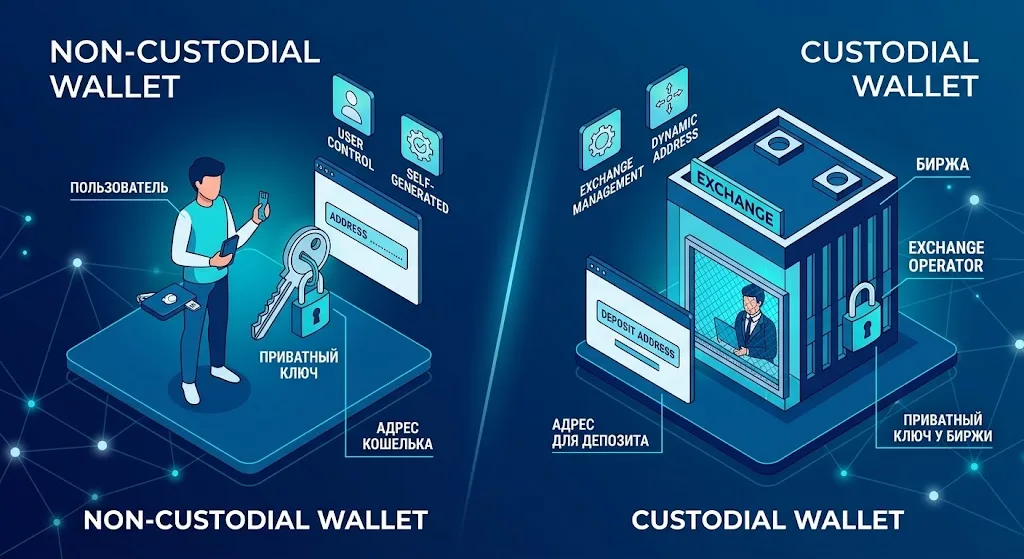
The procedure of accessing the wallet address is slightly different depending on who is in possession of the private keys of the wallet. A non-custodial wallet, such as a browser extension or hardware wallet installed directly by the user, generates keys and addresses on the user's own device, with no company holding a copy of those keys.
A custodial wallet, most commonly an exchange account, generates and manages addresses on the user's behalf, with the exchange holding the private keys rather than the individual user. That is why the exchange deposit address may change or depend on certain steps of account verification, while an address generated by a personal, non-custodial wallet remains under the user's sole control from the moment it is created.
Wallet Address Versus Private Key: A Critical Difference
While the wallet address is made to be shared publicly and lets others send the funds to it, the private key or the recovery phrase (which can restore every private key) should never be shared with anyone, since whoever holds it has complete control over the funds associated with it.
This distinction matters because of a common and effective scam pattern: a message or website asking someone to "verify" or "confirm" their wallet by entering their recovery phrase, disguised as a request related to their public address. No legitimate service ever needs a private key or recovery phrase to access or check a wallet address.
How to Verify You Have the Correct Address
Most address formats include a built-in checksum, a small amount of redundant information used to detect a mistyped character. This is why pasting an address with even one character changed usually produces an invalid address error rather than silently sending funds somewhere unintended. though this protection depends on the receiving wallet or exchange actually checking the address format before broadcasting a transaction.
Comparing the first and last several characters of a copied address against the original source remains a reasonable habit, particularly when an address has been read aloud, retyped manually, or copied through a channel where a single character could easily be altered without immediately obvious formatting errors.
Safely Sharing Your Wallet Address
Sharing the wallet address for receiving funds is safe by design, but the process around sharing it can introduce risk. Clipboard hijackers (malware programs) can secretly monitor the clipboard contents of your device and replace the address in it with the attacker's address before you paste it somewhere, which is why checking the pasted address against the original before confirming a transaction is a meaningful precaution rather than an unnecessary extra step.
QR codes offer a more direct alternative to copying and pasting an address manually, reducing the chance of a transcription error. But it is worth making sure that the QR code itself was received from a reliable source.
Common Mistakes When Using a Wallet Address
Several easy-to-avoid mistakes cause most of the trouble people experience while using the wallet addresses.
-
Sending funds to an address on the wrong network, such as sending an asset built for Ethereum to an address that only exists in a form usable on a different blockchain.
-
Confusing the wallet address with the private key or recovery phrase when responding to a request for wallet information.
-
Reusing an old, publicly shared address for large transfers without confirming it still belongs to the intended recipient, particularly in business or high-value contexts.
-
Copying an address from an untrusted source, such as a comment section or an unfamiliar message, rather than a verified, official channel.
Related guides


 Scroll to top